

Understanding the Procedure
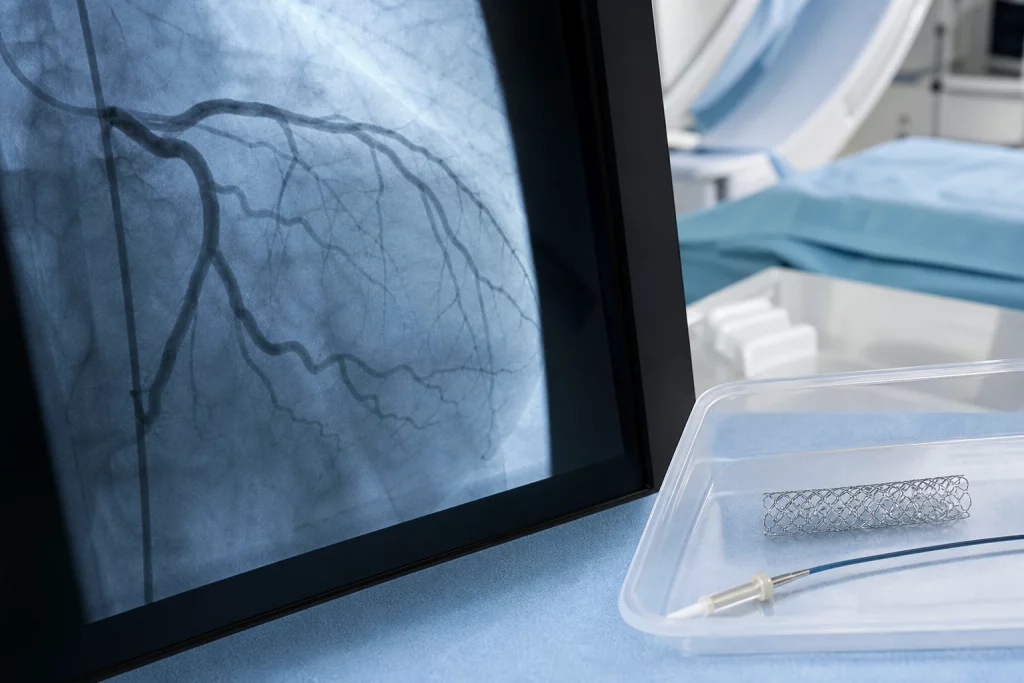
Percutaneous Coronary Intervention (PCI) is an invasive procedure that opens blocked or narrowed coronary arteries using a thin, flexible tube called a catheter. Also commonly known as coronary angioplasty, the procedure involves inflating a small balloon inside the blocked artery to widen it, and often placing a small metal mesh tube called a stent to keep the artery open.
This interventional treatment addresses coronary artery disease, where fatty deposits called plaques build up inside the coronary arteries, reducing blood flow to the heart muscle. The procedure is performed in a cardiac catheterisation laboratory and typically takes between 30 minutes to two hours, depending on the complexity of your condition. PCI may be recommended as part of your treatment plan when medication alone is not sufficient to manage your symptoms or when there is significant or ‘high-risk’ blockage that requires intervention.
Symptoms
- Chest pain or discomfort during physical activity or stress
- Shortness of breath or reduced exercise tolerance
- Fatigue due to coronary blockages
- Arm, neck, or jaw pain caused by reduced blood flow to the heart
Common Causes
- Coronary artery disease with significant narrowing
- Stable angina not responding to medication
- Acute coronary syndrome or heart attack
- Multi-vessel coronary disease requiring intervention
Treatment Options
Percutaneous Coronary Intervention may address several cardiac conditions and symptoms. The procedure is primarily used to treat coronary artery disease, where one or more coronary arteries have become significantly narrowed or blocked. This may manifest as stable angina, where chest pain occurs predictably during exertion or stress, or as acute coronary syndromes (including heart attacks), where immediate restoration of blood flow is critical.
The procedure can address both single-vessel and multi-vessel coronary disease, depending on your specific condition and clinical presentation. Symptoms that may improve following successful PCI include chest pain or discomfort, shortness of breath during activity, fatigue, and reduced exercise capacity. Your Cardiologist will assess whether PCI is be appropriate based on the location and severity of blockages, your overall health, and your response to other treatments.
- Balloon Angioplasty
- Single-Vessel PCI
- Elective PCI for Stable Angina
- Drug-Eluting Stent Implantation
- Coronary Stent Placement
- Multi-Vessel PCI
- Emergency PCI for Heart Attack
- Post-PCI Medication Management
Frequently Asked Questions
Is PCI painful?
Most patients experience minimal discomfort during PCI as local anaesthetic is used at the catheter insertion site. You may feel some pressure during the procedure, but significant pain is uncommon.
How long does the procedure take?
PCI typically takes between 30 minutes to two hours, depending on the complexity of your condition and the number of arteries being treated.
When can I return to normal activities?
Most patients can resume light activities within a few days. Dr Chandra will provide specific guidance about returning to work, driving, and exercise based on your individual recovery.
Will I need to take medication after PCI?
Most patients are prescribed specific medications following PCI to prevent blood clots and support heart health. Dr Chandra will discuss the appropriate medication plan for your individual circumstances during your follow-up appointment.