A pacemaker may be needed when the heart beats too slowly, pauses, or conducts its electrical signals unreliably causing symptoms or posing a risk to health.
In practice, the question of when a pacemaker is needed is answered by combining three things: what the heart rhythm is doing, whether the patient has symptoms such as dizziness or blackouts, and whether the problem is likely to be permanent. Dr Navin Chandra, Consultant Cardiologist, assesses patients with these rhythm concerns and explains the reasoning behind each recommendation in plain language.
Dr Navin Chandra is a Consultant Cardiologist practising in East Berkshire & South Buckinghamshire, with expertise spanning coronary artery intervention, structural heart procedures such as TAVI, sports cardiology and inherited cardiac conditions. Permanent pacemaker implantation is one of the core procedures he performs, alongside coronary angiography, angioplasty and advanced cardiac imaging. This article explains who may need a pacemaker, what signs to look out for, how the decision is made and what the timing usually looks like.
What Is a Pacemaker and What Does It Do?
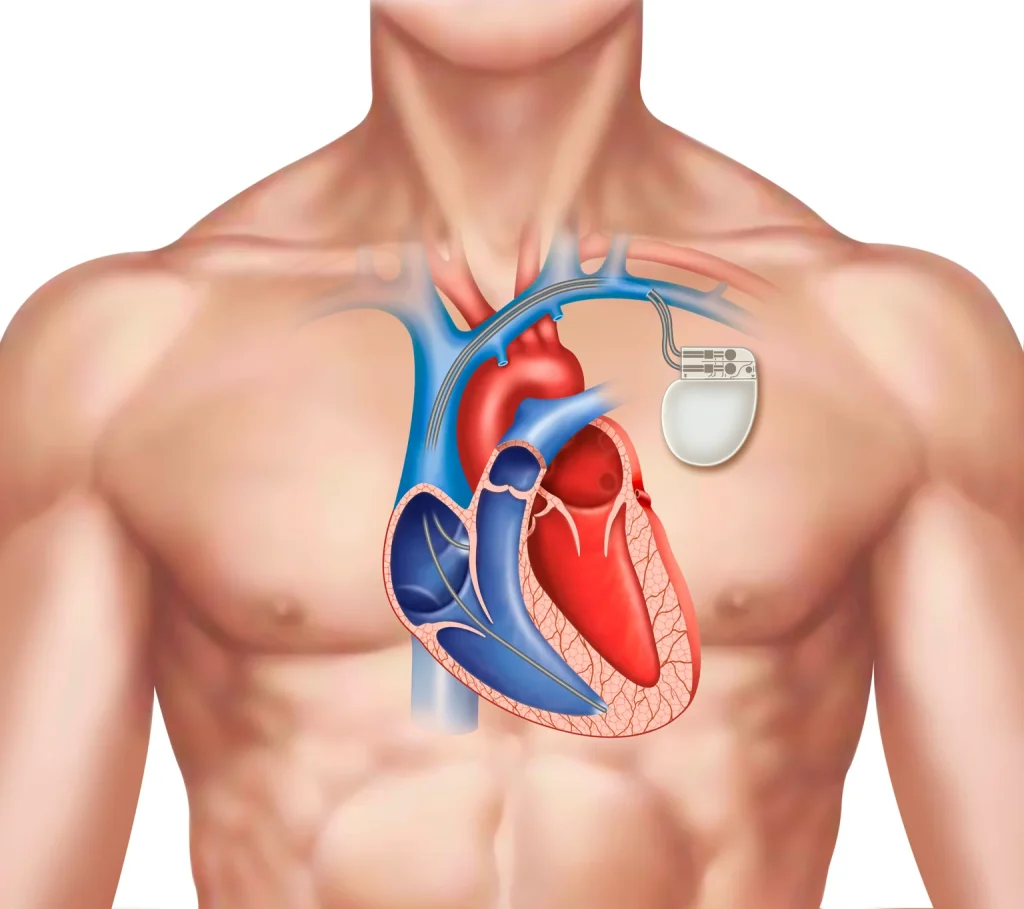
A pacemaker is a small, battery powered device, usually about the size of a matchbox, implanted under the skin near the collarbone. Thin wires, called pacing leads, pass through a vein into the heart. The device continuously monitors the heart’s own rhythm and delivers tiny, painless electrical impulses only when the heart rate falls below a set level or a beat is missed.
Modern pacemakers do not take over from the heart. They act as a safety net, stepping in when the heart’s natural electrical system fails to do its job. Some devices pace a single chamber, others pace two chambers to keep the upper and lower parts of the heart working in sequence. Leadless pacemakers, which sit entirely inside the heart, are now available for selected patients.
When Is a Pacemaker Needed? The Main Medical Reasons
The short answer is that a pacemaker is needed when the heart’s electrical system is too slow or too unreliable to maintain a normal circulation. Below are the conditions that most commonly lead to this recommendation. In each case, a Cardiologist will look for a clear link between the rhythm abnormality and the patient’s symptoms before advising treatment.
When Is a Pacemaker Needed for a Slow Heart Rate?
Bradycardia simply means a slow heart rate, generally under 60 beats per minute. A slow pulse is not automatically a problem. Fit, athletic people often have resting rates in the 40s or 50s and feel completely well. A pacemaker is given when the slow rate is abnormal for that individual and causes symptoms such as fatigue, breathlessness on exertion, light headedness or fainting, and when a reversible cause has been excluded. Reversible causes can include certain medications, an underactive thyroid or electrolyte disturbance, so these are checked first.
When Is a Pacemaker Needed for Heart Block?
Heart block occurs when the electrical signal travelling from the upper chambers to the lower chambers is delayed or interrupted. First degree heart block usually needs no treatment. Second degree block may or may not require pacing, depending on the type and the symptoms. Complete (third degree) heart block, where no signals get through at all, is one of the clearest situations in which a pacemaker is necessary, and it is often arranged urgently because of the risk of prolonged pauses or collapse.
Pacemakers for Sick Sinus Syndrome and Long Pauses
The sinus node is the heart’s natural pacemaker. When it becomes unreliable, often with age or after scarring, the heart rate may swing between too slow and too fast, or the heart may pause for several seconds at a time. This pattern, known as sick sinus syndrome or ‘tachy-brady’ syndrome, frequently leads to a pacemaker recommendation, particularly when the pauses cause blackouts or when the medication needed to control the fast rhythm would otherwise make the slow rhythm dangerous.
Pacemakers in Atrial Fibrillation with a Slow Pulse
Atrial fibrillation is usually associated with a fast, irregular pulse. In some patients, however, the conduction system is also diseased and the rate becomes very slow, or significant pauses appear. Pacing may then be advised so that rate controlling medication can be used safely. The British Heart Foundation offers clear patient information on atrial fibrillation and the treatments used to manage it.
What Symptoms Might Suggest a Pacemaker Could Be Needed?
Symptoms are a central part of deciding when a pacemaker is needed. The following can all point towards a slow or unreliable heart rhythm and are worth discussing with your GP or Cardiologist:
- Fainting or near fainting, especially without warning
- Recurrent dizziness or light headedness, particularly on standing or exertion
- Unusual tiredness or a marked drop in exercise capacity
- Breathlessness that has developed gradually without another explanation
- A pulse that feels persistently slow, irregular or seems to pause
- Episodes of confusion or feeling vague in older adults
- Chest discomfort accompanying any of the above
Sudden collapse, chest pain or severe breathlessness should always be treated as a medical emergency. Call 999 rather than waiting for a routine appointment.
How Do Cardiologists Decide When a Pacemaker Is Needed?
The decision is never based on a single reading. It rests on documented evidence of a rhythm abnormality, a clear correlation with symptoms, and an assessment of future risk. Some patients have no symptoms at all but show a degree of conduction disease that carries a meaningful risk of sudden deterioration, and pacing may still be advised in those cases.
Which Tests Are Used Before Deciding When a Pacemaker Is Needed?
A typical assessment begins with a detailed clinical history and may include several of the following tests:
- Electrocardiogram (ECG): a recording of the heart’s electrical activity that can immediately reveal heart block or a slow rhythm.
- Ambulatory monitoring: a 24-hour to 14-day monitor, or an implantable loop recorder for infrequent symptoms, to capture the rhythm at the moment symptoms occur.
- Echocardiography: an ultrasound scan assessing the heart muscle and valves, since structural disease influences the type of device chosen.
- Exercise testing: to see whether the heart rate rises appropriately with activity.
- Blood tests: checking thyroid function, kidney function and electrolytes to exclude reversible causes.
- Medication review: beta blockers and certain other drugs can slow the heart, and adjusting them sometimes removes the need for pacing altogether.
How Quickly Does It Happen? Timing and Urgency
Timing varies considerably. When a patient presents with complete heart block, very long pauses or repeated blackouts, implantation is arranged as an emergency or within a few days, often during a hospital admission. When symptoms are milder and the rhythm abnormality is intermittent, the procedure is usually planned as a routine day case once monitoring has confirmed the diagnosis.
Temporary Versus Permanent Pacing
Occasionally a temporary pacing wire is used to stabilise someone while the underlying cause is treated, for example after a heart attack, during severe infection or while a slowing medication wears off. If the conduction system recovers, no permanent device is needed. When the abnormality persists or the cause is degenerative, a permanent pacemaker is generally recommended.
What Does Permanent Pacemaker Implantation Involve?
Implantation is performed under local anaesthetic, usually with mild sedation, and typically takes around an hour. A small incision is made below the collarbone, the leads are guided into position through a vein using X ray imaging, and the device is connected and tested before the wound is closed. Most patients stay in hospital for a few hours and go home the same day.
Recovery is generally straightforward. Mild soreness and bruising around the site are common for a week or two. Heavy lifting and raising the arm above shoulder height on the implant side are usually restricted for around four to six weeks while the leads settle. Driving restrictions apply for a short period and the DVLA must be informed. Wound care advice, device checks and a follow up schedule will be arranged, with device batteries typically lasting many years before replacement.
As with any procedure, there are risks, including bleeding, bruising, infection, lead displacement and, less commonly, collapse of a lung or a pocket of blood around the device. These are uncommon, and the balance of benefit against risk will be discussed in detail before consent is taken and any procedure performed.
When Is a Pacemaker Not the Right Answer?
Not every slow or irregular pulse needs a device. A pacemaker is not usually given when the slow rate is a normal finding in a fit individual, when a reversible cause can be corrected, or when symptoms are clearly caused by something else such as low blood pressure, anaemia or dehydration. Equally, a pacemaker treats slow rhythms and conduction problems; it does not treat blocked coronary arteries, narrowed valves or most fast rhythms, which require different approaches such as angioplasty, TAVI or ablation. Careful assessment avoids unnecessary procedures and makes sure the right treatment is matched to the right problem.
Frequently Asked Questions
When is a pacemaker needed, in simple terms?
A pacemaker is required when the heart beats too slowly or its electrical signals are blocked, and this causes symptoms such as dizziness, fainting or extreme tiredness, or poses a future risk. The decision follows ECG and monitoring evidence linking the rhythm problem to symptoms, once reversible causes have been excluded.
Can a pacemaker be given without symptoms?
Yes. Some patients have no symptoms but show significant conduction disease on testing, such as advanced heart block or very long pauses. In these situations pacing may be recommended to reduce the risk of collapse. Your Cardiologist will explain the evidence behind the recommendation in your individual case.
How long can you wait for a pacemaker?
It depends on urgency. Complete heart block or recurrent blackouts usually prompt implantation within hours or days, often during an inpatient stay. Milder, intermittent problems are typically scheduled as a planned day case procedure once monitoring has confirmed the diagnosis and the type of device has been decided.
Is having a pacemaker fitted painful?
The procedure is performed under local anaesthetic, sometimes with sedation, so patients feel pressure rather than pain. Afterwards, mild soreness and bruising at the site are common for a week or two and usually settle with simple pain relief. Any worsening pain, redness or fever should be reported promptly.
Will a pacemaker limit normal activities?
Most people return to everyday life, work, travel and exercise once healing is complete. Arm movement on the implant side is restricted for several weeks. Modern devices are not affected by household appliances or mobile phones used sensibly, though certain industrial equipment and some scans require advance discussion.
Does a pacemaker treat a heart attack or blocked arteries?
No. A pacemaker corrects slow or blocked electrical signals. Narrowed or blocked coronary arteries are treated with medication, angioplasty and stenting, or surgery. Some patients need both, for example if heart block develops after a heart attack, and treatment is then planned together.
Summary and Next Steps
Understanding when a pacemaker is given comes down to a simple principle: the device is offered when the heart’s own electrical system can no longer be relied upon to maintain an adequate rate, and when that failure is causing symptoms or carries genuine risk. Recognising signs such as blackouts, unexplained dizziness or a marked fall in exercise tolerance, and having them properly investigated, is the most important step a patient can take.
If you have experienced fainting, palpitations, breathlessness or a persistently slow pulse and would like a thorough cardiac assessment, you can arrange a consultation with Dr Navin Chandra, Consultant Cardiologist to discuss your symptoms, review any monitoring results and understand whether pacing or another treatment may be appropriate for you.
Have Questions About Your Heart Health?
Schedule a consultation with Dr Chandra to discuss personalized strategies for maintaining optimal cardiovascular health.