Understanding how heart pacemakers work is often the first step towards feeling calmer about a diagnosis of a slow or unreliable heart rhythm.
A pacemaker is a small, battery powered device, usually implanted just beneath the skin below the collarbone, that monitors the heart’s own electrical activity and delivers tiny, painless electrical impulses when the natural rhythm becomes too slow or pauses. It does not take over from the heart. It acts as a safety net, stepping in only when needed so that the heart continues to pump enough blood to the brain, muscles and organs. This article explains how heart pacemakers work, who may benefit from one, what the procedure involves and what life afterwards typically looks like.
The information here reflects the everyday clinical practice of Dr Navin Chandra, a Consultant Interventional Cardiologist caring for patients in East Berkshire & South Buckinghamshire. Alongside private Cardiology practice, Dr Navin Chandra works as a Consultant Interventional Cardiologist within Frimley Health NHS Foundation Trust, with sub-specialty interests in coronary intervention, structural heart disease, sports cardiology and inherited cardiac conditions. Permanent pacemaker implantation is one of the procedures he performs regularly.
What is a pacemaker and how do heart pacemakers work?
A permanent pacemaker has two main parts: a generator, which contains the battery and the computer circuitry, and one or more thin insulated wires called pacing leads, which travel through a vein into the chambers of the heart. The generator sits in a small pocket created under the skin, usually on the left side of the chest. Once in place, it is barely visible, although many people can feel a smooth, firm outline under the skin.
To appreciate how heart pacemakers work, it helps to think of the device as a vigilant listener as well as a stimulator. The leads continually sense the heart’s own electrical signals. If the heart is beating appropriately, the pacemaker stays quiet. If a beat is missed, or the rate falls below a programmed threshold, the device releases a small impulse that prompts the heart muscle to contract. Modern devices are also rate responsive, meaning they can detect movement or changes in breathing and gently increase the paced rate during activity such as walking uphill or climbing stairs.
How the heart's natural electrical system works
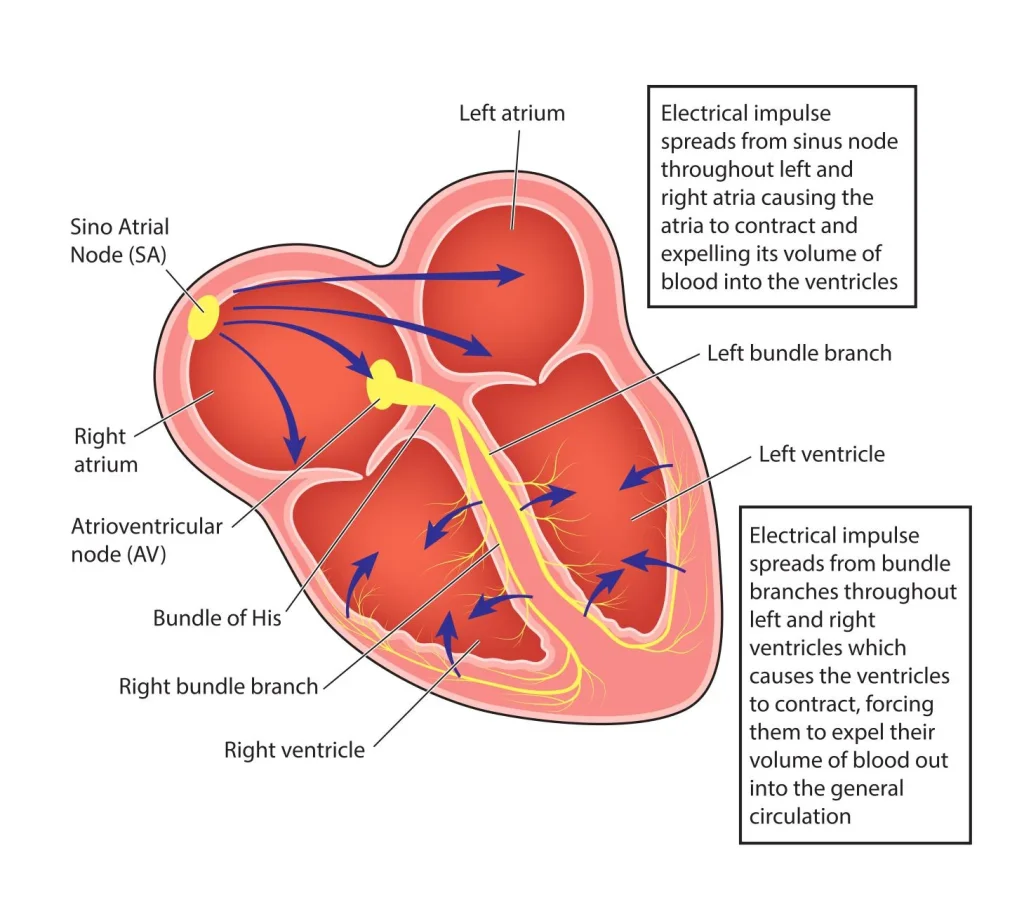
Every heartbeat begins with an electrical signal generated by the sinus node, the heart’s natural pacemaker, in the right atrium. That signal spreads across the upper chambers, passes through a relay station called the atrioventricular node, then travels down specialised conducting fibres to the ventricles, the main pumping chambers. This carefully timed sequence is what produces an efficient, coordinated heartbeat.
Problems arise when the sinus node becomes unreliable with age or disease, or when the electrical signal is delayed or blocked on its way to the ventricles. The result may be a heart rate that is too slow (bradycardia), long pauses between beats, or a loss of coordination between the upper and lower chambers.
How heart pacemakers work to restore a reliable rhythm
Once implanted, the device is programmed to a lower rate limit, for example 60 beats per minute. If the heart’s own rate drops below that, pacing begins automatically. In patients with heart block, the pacemaker can also restore the correct timing between the atria and ventricles, so the chambers fill and empty in the right order. This is central to how heart pacemakers work in practice: the aim is not simply to raise the heart rate, but to reproduce a natural, physiological pattern of contraction as closely as possible.
Who may need a pacemaker?
A pacemaker may be recommended when a slow or interrupted heart rhythm is causing symptoms, or when there is a documented electrical abnormality that carries a risk of dangerous pauses even if symptoms are mild. The decision is always individualised and is based on symptoms, ECG findings, heart monitor recordings and sometimes imaging or exercise testing.
Symptoms that may prompt assessment
- Dizziness or light headedness, particularly on standing or exertion
- Fainting or near fainting episodes (syncope or presyncope)
- Unusual fatigue or breathlessness during everyday activity
- Palpitations, or an awareness of a very slow or irregular pulse
- Reduced exercise tolerance that has developed over weeks or months
- Confusion or reduced concentration in older adults
These symptoms have many possible causes, including anaemia, medication side effects, low blood pressure and thyroid disease, so they should always be assessed properly rather than assumed to be a rhythm problem. Anyone who has blacked out without warning should seek prompt medical review.
Conditions commonly treated with pacing
- Sick sinus syndrome: the natural pacemaker fires too slowly or pauses, sometimes alternating with fast rhythms.
- Second and third degree heart block: electrical signals are delayed or fail to reach the ventricles.
- Atrial fibrillation with a persistently slow ventricular rate, especially when medication is needed for other reasons.
- Symptomatic bradycardia caused by essential medication that cannot safely be stopped.
- Heart failure with electrical dyssynchrony, where a specialised biventricular device may help the ventricles contract together.
- Certain inherited cardiac conditions affecting the conduction system, an area in which Dr Navin Chandra has published research.
What are the different types of pacemakers?
Device choice depends on which part of the conduction system is affected, the underlying heart rhythm and the person’s general health and activity levels.
- Single chamber pacemaker: one lead, usually in the right ventricle or right atrium.
- Dual chamber pacemaker: two leads, coordinating the atrium and ventricle, which is the most common arrangement for heart block.
- Biventricular pacemaker (cardiac resynchronisation therapy): three leads, used in selected patients with heart failure.
- Leadless pacemaker: a self contained capsule placed directly inside the heart via a leg vein, suitable for a smaller group of patients.
How is a pacemaker fitted?
Implantation is a minimally invasive procedure performed in a cardiac catheterisation laboratory, usually under local anaesthetic with sedation. Most people stay in hospital for a few hours to one night.
- The skin below the collarbone is numbed with local anaesthetic and a small incision, typically around 4 to 5 cm, is made.
- The lead or leads are guided through a vein into the heart using X-ray screening.
- Lead position and electrical readings are tested to confirm reliable sensing and pacing.
- The generator is connected and placed in a pocket under the skin.
- The wound is closed, and the device is programmed and checked before discharge.
- A chest X-ray and device check are usually performed before you go home.
Recovery, follow up and everyday life
Most people are back to light daily activities within a few days. Heavy lifting and raising the arm on the implant side above shoulder height are usually limited for four to six weeks while the leads settle. Some bruising and discomfort around the site is normal. Any increasing redness, swelling, discharge or fever should be reported promptly, as infection, although uncommon, needs early attention.
Pacemakers are checked periodically in clinic, and many devices now transmit data remotely from home. Batteries typically last several years, after which the generator is replaced in a shorter procedure. Driving rules apply after implantation, and the DVLA guidance on cardiovascular disorders and fitness to drive should be followed; your Cardiologist will advise on timing.
Living safely with a device
- Mobile phones are safe; simply avoid keeping one in a breast pocket directly over the device.
- Airport security and shop security systems are not harmful, though it is sensible to walk through steadily and carry your device identification card.
- Induction hobs, welding equipment and some industrial machinery may need specific advice.
- Always tell any healthcare professional, including dentists and physiotherapists, that you have a pacemaker before treatment, particularly before MRI scanning.
Are there risks to consider?
Pacemaker implantation is generally well tolerated, but no procedure is without risk. Possible complications include bruising or bleeding at the site, infection, lead displacement requiring repositioning, a small risk of collapsed lung (pneumothorax) and, rarely, damage to the heart or blood vessels. These risks, along with the expected benefits, will be explained in detail during the consent discussion so that the decision is genuinely shared.
Frequently Asked Questions
In simple terms, how do heart pacemakers work?
A pacemaker constantly monitors the heart’s electrical activity through thin leads. When the heart beats normally, the device stays inactive. If the rate falls too low or a beat is missed, it delivers a small, painless impulse that triggers a heartbeat, keeping the rhythm steady and reliable.
Can you feel a pacemaker working?
Most people cannot feel the pacing impulses themselves, as the energy used is extremely small. Some notice the firm outline of the generator under the skin, and occasionally people sense improved energy once a very slow rhythm has been corrected. Unusual sensations should always be reported at a device check.
How long do pacemaker batteries last?
Battery life varies with device type and how much pacing is required, but generators commonly last several years before replacement. Regular clinic or remote checks track battery status well in advance, so replacement can be planned electively rather than urgently.
Will a pacemaker limit exercise or sport?
Once healing is complete, most people return to walking, cycling, swimming and gym based exercise. Rate responsive settings help the heart rate rise with activity. Contact sports may need individual discussion, and advice should be tailored to your underlying heart condition.
Does a pacemaker treat a heart attack or blocked arteries?
No. A pacemaker corrects electrical rhythm problems, not narrowed coronary arteries. Blockages are assessed and treated separately, for example with coronary angiography and angioplasty. Some patients need both, which is why a full cardiac assessment is important.
Where can pacemaker assessment be arranged near Windsor?
Assessment usually begins with a consultation, an ECG and often a period of heart rhythm monitoring and an echocardiogram. These investigations are available privately in the Windsor area and through NHS Cardiology services, with a treatment plan agreed once the cause of symptoms is clear.
Summary and next steps
Knowing how heart pacemakers work makes the prospect of treatment far less daunting. These devices are highly reliable, work quietly in the background and are designed to support the heart’s own rhythm rather than replace it. For people with symptomatic bradycardia or heart block, pacing can restore energy, reduce dizziness and blackouts and allow a return to normal daily life.
If you have been experiencing dizziness, fainting, breathlessness or an unusually slow pulse, or you would like a second opinion on whether a pacemaker may be suitable for you, a specialist consultation with Dr Navin Chandra can provide a clear diagnosis and a personalised plan. Appointments can be arranged through the contact page, and any recommendation will always be discussed openly, including the benefits, risks and alternatives.
Have Questions About Your Heart Health?
Schedule a consultation with Dr Chandra to discuss personalized strategies for maintaining optimal cardiovascular health.