

Understanding the Procedure
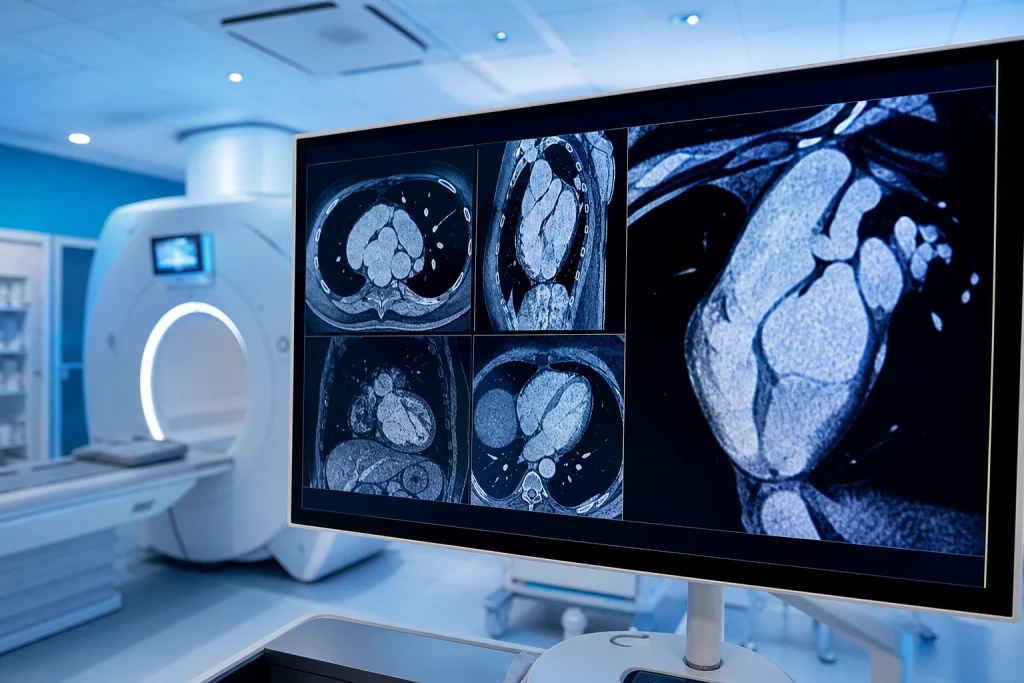
Cardiac imaging encompasses a range of non-invasive techniques used to visualise the heart’s anatomy, blood vessels, and overall function. As a specialist in cardiovascular imaging, I utilise these advanced tools to guide treatment decisions and monitor cardiac health accurately.
These procedures provide detailed, high-resolution pictures of the heart in motion. Whether using ultrasound waves (echo), magnetic resonance (MRI), or computed tomography (CT) – the goal is to obtain precise data that forms the foundation of an effective, personalised treatment strategy.
Why It Is Performed
- To evaluate heart muscle function
- To assess cardiac valve performance
- To identify coronary artery blockages
- To guide interventional cardiac procedures
What to Expect
- Painless, non-invasive diagnostic scanning
- Quick procedure with no downtime
- Immediate availability of initial results
- Highly detailed structural heart analysis
The Treatment Approach
My approach to cardiac imaging ensures that the most appropriate modality is selected for your specific clinical needs. The imaging process is carefully coordinated to maximise diagnostic yield while ensuring your complete comfort throughout the procedure.
Depending on the clinical requirement, the imaging may involve a standard echocardiogram, a stress echocardiogram, or more advanced cross-sectional imaging like Cardiac MRI or Cardiac CT. Each scan is meticulously analysed to provide a comprehensive functional and structural assessment of your heart.
- Delivers highly accurate diagnostic information
- Enables early detection of cardiac issues
- Non-invasive with zero recovery time
- Crucial for planning interventional treatments
Frequently Asked Questions
How long does the imaging take?
Most cardiac imaging procedures take between 30 and 60 minutes, though specialised scans like Cardiac MRI may take slightly longer.
Do I need to prepare for the scan?
Preparation depends on the specific type of imaging. You will be provided with clear, detailed instructions prior to your appointment.
Are there any risks involved?
Standard cardiac imaging, such as echocardiography, is completely safe and carries no risks. Scans involving contrast dye have a very low risk profile, which will be discussed beforehand.